Why Your Work Feels Worse the Moment You Post It
You spend three weeks on something. A short film. A design series. A personal essay. Whatever it is, there's a moment — maybe at 2am, maybe on a Sunday afternoon — where you look at it and think: yeah, that's actually good. That feeling is real. It's earned.
Then you post it.
Within forty-eight hours, you're convinced it's the worst thing you've ever made.
Nothing about the work changed. Not a single frame, not a single word. But somehow, the second it hit a feed, it started shrinking. That's not a coincidence, and it's not just insecurity. There's a very specific psychological mechanism at work — and if you're a creative trying to build something real, you need to understand it.
The Feed Doesn't Show You Your Work. It Shows You a Contest.
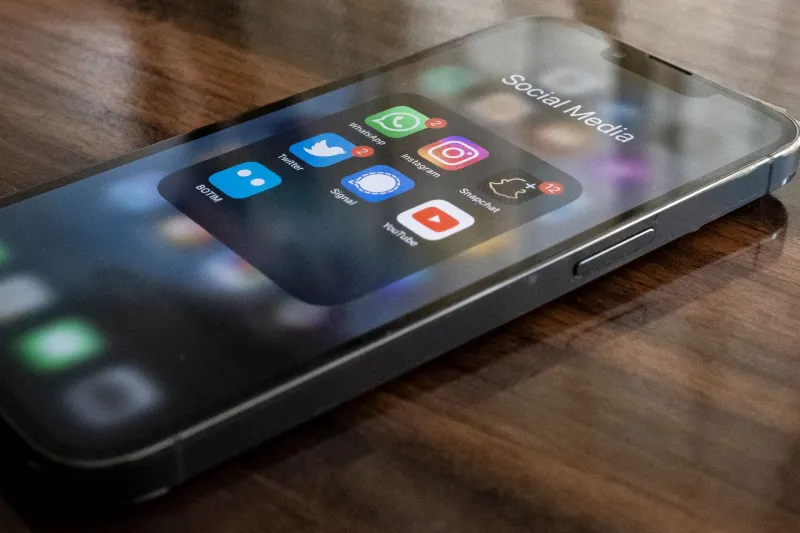
Here's the thing about social media that nobody talks about enough: it is structurally designed to make you compare. The entire interface — the scrolling, the numbers, the algorithmic sequencing — puts your work in direct competition with everything else at all times. You're not posting into a gallery. You're stepping into a boxing ring where the scoreboard updates every thirty seconds.
When your piece sits quietly on your hard drive, your brain evaluates it on its own terms. Does it say what I wanted it to say? Does it feel like me? Is it better than my last one? Those are actually useful questions.
Once it's on Instagram or TikTok or X, your brain switches evaluation systems entirely. Now it's asking: why did that person get ten thousand likes and I got forty? Why did the algorithm push that video and not mine? Is my work just... worse?
You're no longer measuring your work. You're measuring your ranking. And rankings are a terrible way to assess creative quality.
Metrics Aren't Feedback — They're Weather
Likes, views, shares — these numbers feel like feedback because they're responsive. They change based on something you did. But they're actually much closer to weather patterns than to genuine critical response.
A post can perform poorly because you published it on a Tuesday at noon, because the algorithm was deprioritizing your content type that week, because a news cycle drowned out organic reach, or because your most engaged followers happened to be offline. None of that has anything to do with whether the work is good.
But your brain doesn't care about that nuance when it's 11pm and you're refreshing your analytics. Your brain sees a low number and files it under evidence.
Over time, this creates a genuinely dangerous feedback loop. You start making creative decisions — pivoting your style, abandoning a series, softening a point of view — based on data that was never actually measuring what you thought it was. Creatives who've been on this treadmill long enough often describe a kind of creative amnesia: they can't remember what they actually liked making anymore, because they've been optimizing for so long.
The Private Audience Problem
Here's something worth sitting with: the people who know your work best — your real audience, the ones who send you actual messages, who bring up your stuff in conversation, who come back repeatedly — almost never show up in your vanity metrics.
They're not the ones rage-commenting or sharing for controversy. They're quiet. They absorb. They remember. And the algorithmic machinery of every major platform is essentially blind to them, because it optimizes for engagement signals that look nothing like thoughtful appreciation.
So when you post something genuine and it performs 'poorly,' what you're often actually measuring is how well it catered to strangers who had no prior relationship with your work. That's a wildly irrelevant data point for understanding whether your actual audience connected with it.
The fix isn't to stop posting. The fix is to build a separate, private feedback channel that isn't contaminated by the feed. Email lists are the obvious one — and yes, they feel old-fashioned, but there's a reason every serious creator eventually migrates there. Direct conversation. No algorithm. No scoreboard.
What Happens When You Give Work Time to Land
One of the quieter truths about creative work is that it often resonates on a delay. Something you made six months ago might be the thing that brings someone to you today. A piece that got twelve likes in the first twenty-four hours might be the one that's still getting shared two years later.
Algorithms don't measure that. They measure the first seventy-two hours and then functionally bury the piece forever. So if your entire sense of a work's value is tied to its initial performance window, you're evaluating it at the single worst possible moment — right when the machinery is most indifferent to it.
Give your work a longer runway before you decide what it means. Not just in terms of external reception, but internally. Come back to it in three months. Read it again. Watch it again. Ask yourself: does this still feel like me? Does it still hold up?
Chances are, it does. Maybe more than you thought.
The Practice Worth Protecting
If there's one thing I'd suggest — and this is something I've had to build deliberately — it's keeping a body of work that never gets posted. Not because it's bad. Because it's yours. Because some creative output exists to clarify your own thinking, sharpen your instincts, or just remind you what you actually sound like when nobody's watching.
The feed is a tool. It's a useful one. But it's a genuinely terrible mirror.
Your work looked good before you posted it for a reason. That reason didn't disappear when the likes didn't come. It's still there. And protecting your ability to see it clearly — without a number attached — might be the most underrated skill in a creative career right now.