Show Everything or Show Nothing: The Real Price of Building in Public
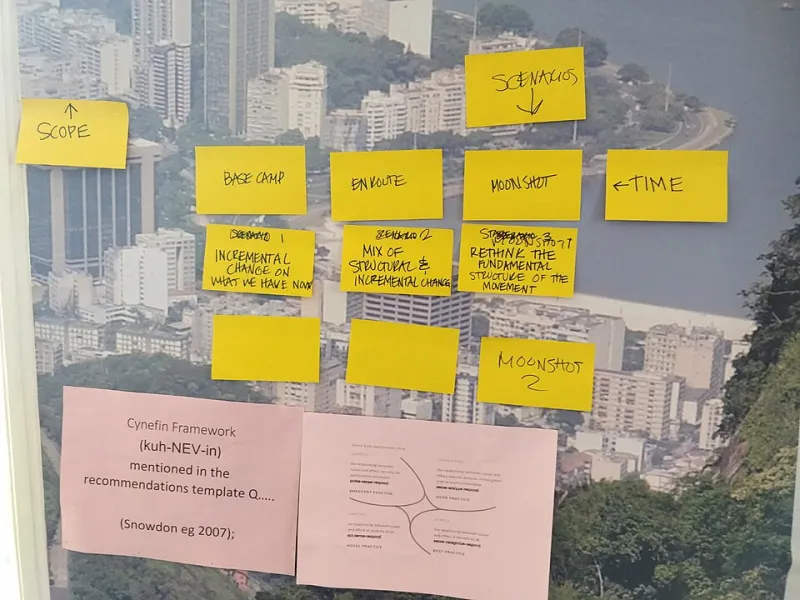
Photo: MPourzaki (WMF), CC BY-SA 4.0, via Wikimedia Commons
At some point in the last few years, "building in public" became less of a strategy and more of a personality type. The creators who document every step — the drafts, the failures, the revenue numbers, the pivots — became a kind of aspirational model. Transparency as brand. Process as content.
And look, it works. For some people, in some contexts, it works spectacularly well.
But there's a quieter, equally successful group of creators who do the exact opposite. They build completely in private, release finished work, and share almost nothing about how the sausage gets made. And they're doing just fine.
So which approach is right? The honest answer is: it depends on things most "build in public" guides don't bother asking about. Let's get into the actual costs of both.
What Building in Public Really Costs You
The pitch for building in public is compelling: you grow an audience while you work, you stay accountable, you create community around your process, and you generate content without needing to produce finished work constantly. All of that is real.
What's less discussed is what you give up.
Creative freedom gets expensive fast. When your audience is invested in your process, they become stakeholders in your outcome. That's warm and connective — and it's also a subtle pressure system. Changing direction mid-project feels like a betrayal of everyone who watched you commit to the original plan. Scrapping something that isn't working becomes a public event. The creative risk-taking that happens naturally in private gets performed in front of witnesses, and performance changes behavior.
This isn't hypothetical. Talk to creators who have built in public for a while and many of them will quietly admit that they started self-editing their process — not finishing ideas that felt too weird, not pivoting when they should have, because the audience was watching and had expectations.
The work can start serving the documentation. There's a subtle but serious inversion that can happen: instead of documenting your creative process, you start creating a process worth documenting. You make decisions that are interesting to share rather than decisions that are right for the work. The work becomes secondary to the narrative around the work.
This is what I'd call transparency theater — the performance of openness that, paradoxically, becomes its own kind of inauthenticity.
Idea exposure is real, even if "idea theft" is overblown. The more common issue isn't someone stealing your concept — it's that sharing your idea too early flattens your own enthusiasm for it. There's psychological research suggesting that talking about a goal can reduce motivation to achieve it, because the brain gets a small hit of satisfaction from the social acknowledgment. For creative work, this can mean the best ideas lose their charge before they're fully developed.
What Building in Secret Really Costs You
Before this starts to sound like a case against transparency, let's be honest about what the private approach costs too.
You build slower, at least at first. Building in public generates audience and momentum simultaneously. Building in private means you're doing all the work before anyone is invested in seeing it. The launch moment has to do all the heavy lifting that building in public distributes across time.
Isolation compounds uncertainty. When you're working in secret, every doubt stays with you. There's no community to sanity-check your thinking, no early feedback to tell you you're wildly off-base, no external accountability when motivation dips. For some creators, that isolation is energizing. For others, it's where projects go to die quietly.
You miss the connection window. Some of the most loyal creative audiences are built not around finished work but around the journey. People who watched you figure it out feel ownership over your success in a way that people who discovered you after the fact rarely do. Building in private means potentially missing that cohort entirely.
The "finished reveal" is getting harder. In a media environment where process content performs well and audiences are conditioned to want behind-the-scenes access, dropping a finished project cold is increasingly a harder ask. Not impossible — but harder.
The Variable Nobody Talks About Enough: Temperament
Most of the discourse around building in public focuses on strategy. Engagement metrics, audience growth, content efficiency. What it almost never addresses is temperament.
Some people genuinely thrive under external observation. They're energized by an audience, they think better when they're explaining their thinking to someone, and accountability feels supportive rather than constraining. For these creators, building in public isn't just a strategy — it's genuinely how they do their best work.
Other creators are exactly the opposite. They need privacy to take risks. They need the freedom to fail without witnesses. External attention during the process isn't energizing — it's paralyzing. For these people, building in public isn't a growth strategy; it's a slow creative suffocation, no matter how well it performs.
Neither temperament is better. But pretending they're the same is how a lot of creators end up performing a version of openness that doesn't fit them and wondering why it feels wrong.
A Framework That Actually Helps
Rather than choosing between fully public and fully private, most creators benefit from thinking in layers:
What can be shared at any stage? Values, perspective, general direction, finished work — these rarely carry the risks of premature process exposure.
What needs to incubate privately? The earliest, most fragile versions of ideas. The pivots you haven't committed to yet. The failures you need to process before you can contextualize them.
What's worth sharing specifically because it's in progress? Work where community input genuinely improves the outcome. Projects where accountability serves the timeline. Processes that are genuinely interesting and not just performed for content.
The goal isn't maximum transparency or maximum privacy. It's intentional transparency — sharing what serves both your work and your audience, protecting what needs protection, and being honest with yourself about which is which.
The Bottom Line
Building in public is a legitimate strategy, not a moral virtue. Building in private is a legitimate strategy, not a sign of insecurity or elitism. The creators who figure this out fastest are the ones who stop asking "which approach is better?" and start asking "which approach fits how I actually work?"
Your process is yours. Decide deliberately how much of it belongs to everyone else.