Inspired or Infected? How Studying Other Creatives Can Quietly Erase You
Here's something nobody wants to say out loud: a lot of creatives who think they're finding their voice are actually just borrowing someone else's.
Not intentionally. Not maliciously. It happens slowly, almost invisibly — the way a song gets stuck in your head without you realizing it. You follow a photographer whose work you love, spend six months studying their framing and color palette, and then one day you're shooting in a style that feels vaguely familiar. Comfortable. But not quite yours.
That's the comparison trap in action. And it's a lot more common — and a lot more corrosive — than the creative world likes to admit.
The Inspiration Myth We All Bought Into
From the time we're in school, we're told to study the masters. Read the great writers. Analyze the films that changed cinema. Dissect the campaigns that moved culture. And look, there's real value in that. Understanding craft, studying technique, learning how structure works — that stuff matters.
But somewhere along the way, "study the greats" got quietly distorted into "model yourself after whoever's winning right now."
Inspiration is supposed to be a spark — something that ignites your own ideas. What often happens instead is that it becomes a template. You see someone's aesthetic, their workflow, their content strategy, their brand voice, and you start reverse-engineering it. Not to understand why it works, but to replicate what it looks like.
That's not inspiration. That's infection.
And the tricky part? It feels productive. It feels like learning. You're watching, absorbing, taking notes. But underneath all that research, your own instincts are getting quieter.
Why Comparison Culture Hits Creatives Differently
For most people, comparison is annoying. For creatives, it's existential.
When you're building something personal — a body of work, a brand, a body of writing, a visual identity — your sense of self gets wrapped up in it. So when you see someone else doing something similar, but with more followers, more revenue, more critical praise, the comparison doesn't just sting your ego. It makes you question your direction.
And that's where the real damage happens. You start second-guessing the creative choices that made your work interesting in the first place. You sand down the rough edges because theirs are smooth. You shift your color palette because theirs is trending. You adopt their cadence, their format, their topics.
Psychologists call this "social comparison theory" — the idea that humans naturally evaluate themselves by measuring against others. It's an ancient survival mechanism. But in a creative context, it actively works against you. Because the things that make your work valuable are usually the things that make it different. And difference is exactly what comparison pressure trains you to eliminate.
What the Most Original Creators Actually Did
Here's something worth sitting with: some of the most distinctive voices in American creative culture deliberately avoided studying their direct competition during the years when their style was still forming.
Rick Rubin — one of the most influential music producers of the last four decades — has talked openly about how he often approaches projects with an almost aggressive ignorance of what's currently charting. His whole philosophy centers on serving the work rather than the market. And that approach produced sounds that didn't sound like anything else at the time.
Same thing with writers like Toni Morrison, who famously said she wrote the books she wanted to read — not the books that were selling. Or directors like the Coen Brothers, who built a filmmaking voice so specific that "Coen Brothers-esque" became its own genre descriptor.
None of these people were ignorant of their craft. They studied deeply. But they were selective and intentional about what they studied and when. They understood that during the formative stages of creative development, exposure to too many strong external voices can crowd out the internal one you're trying to grow.
A Practical Framework for Studying Without Losing Yourself
So how do you actually do this? How do you learn from other artists without letting them overwrite you?
Study craft, not style. There's a difference between understanding why something works and copying how it looks. When you analyze another creator's work, push past the surface. Ask: What emotional effect does this create? What structural choice made that possible? What problem were they solving? Those are transferable lessons. The specific aesthetic choices they made to solve those problems are theirs.
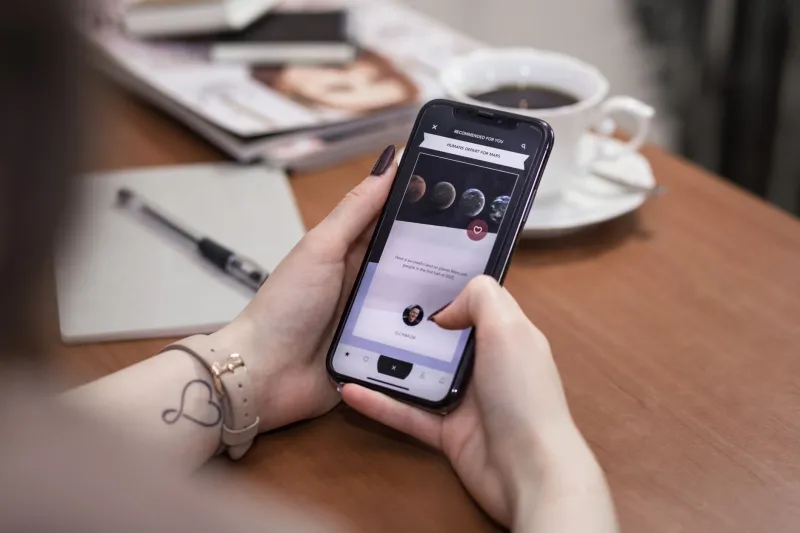
Create before you consume. Make this a rule, at least during active creative phases. Do your own work first — write the draft, shoot the photos, record the demo — before you open Instagram or YouTube or Spotify. Your ideas, uncontaminated. Then consume. The order matters more than you think.
Study outside your lane. If you're a graphic designer, spend more time studying architecture, jazz composition, or street photography than you spend studying other graphic designers. Cross-disciplinary study gives you raw material that most people in your field haven't processed yet. That's where original combinations come from.
Notice what you're drawn to vs. what you're trying to chase. These are different impulses. One is authentic curiosity. The other is competitive anxiety. Learn to tell them apart in your gut. The work you do from genuine curiosity tends to be better.
Give yourself a comparison detox. This sounds dramatic, but try it: take 30 days where you intentionally don't look at work in your specific niche. No competitor research, no "keeping up with the field." Just make things. See what comes out when the external noise drops.
The Real Cost of Looking Like Everyone Else
Here's the practical argument, beyond the philosophical one: in a saturated creative market, differentiation is survival.
When you dilute your voice to look more like the people who are currently succeeding, you're entering a race you can't win. They have the head start. They have the audience that already knows them. You're a newer, less-established version of something people can already get elsewhere.
But when your work is genuinely, unmistakably yours — when it has a texture and a perspective that couldn't have come from anyone else — you're not competing with anyone. You're creating your own category.
That's not just a creative ideal. That's a strategic advantage.
The Question Worth Asking
Next time you sit down to create something and you feel the pull to check what everyone else is doing first — pause. Ask yourself honestly: am I looking for inspiration, or am I looking for permission?
Because if you're waiting for someone else's success to validate your direction, you'll always be one step behind. And you'll make work that looks like a response to someone else's vision instead of an expression of your own.
Your work doesn't need to look like theirs. It never did. The whole point is that it looks like you — and there's only one version of that in existence.
That's not a limitation. That's the whole advantage.